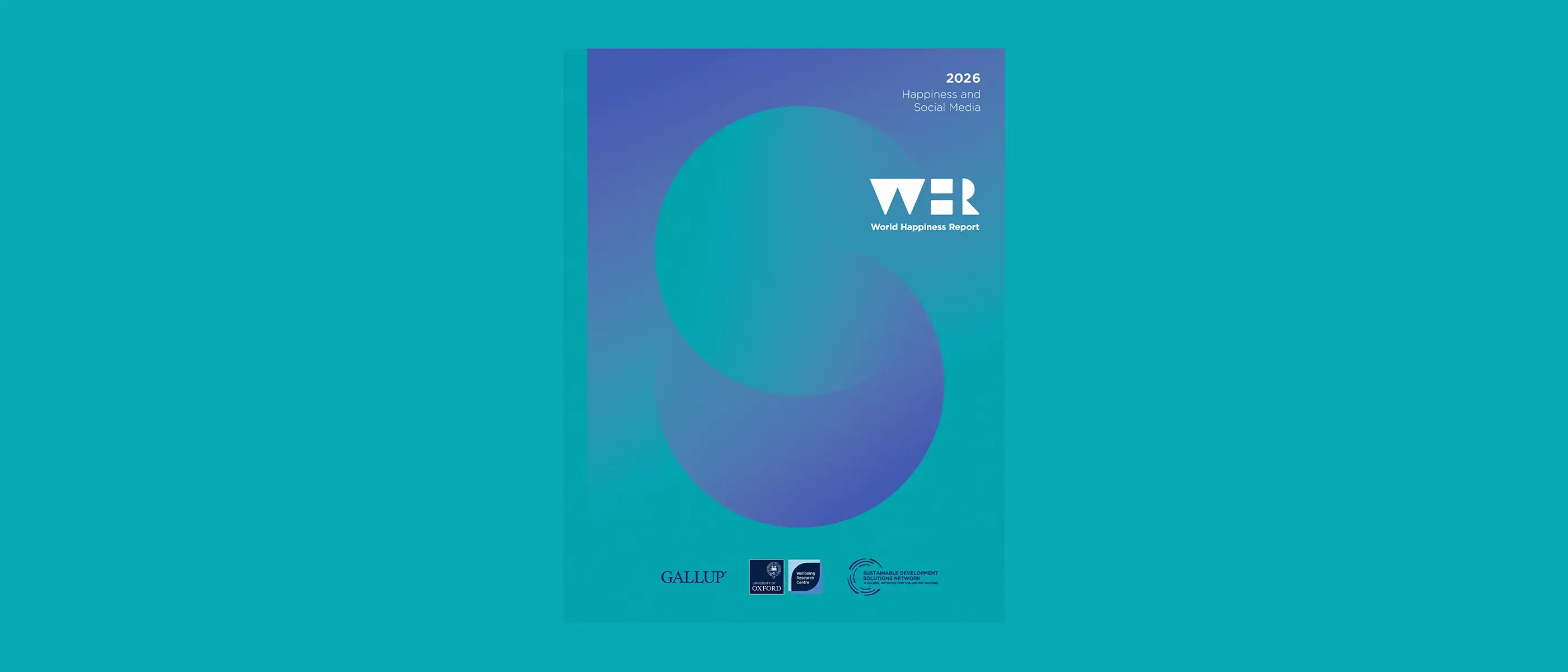
Trieste, 19 March 2026 – illycaffè and the Ernesto Illy Foundation ETS renew their commitment to promoting collective happiness and social wellbeing, supporting the World Happiness Report 2026. This partnership began in 2017 out of a shared belief that happiness is not just an individual value, but a social goal to invest in through concrete actions and scientific research.
“The World Happiness Report 2026, recognised worldwide as a benchmark for the evaluation of global happiness, reiterates how vital it is to create collaborations between businesses, institutions and foundations to foster collective wellbeing - says Anna Illy, President of the Ernesto Illy Foundation ETS – Putting people at the centre is the guiding principle that illycaffè and the Ernesto Illy Foundation pursue every day, with the aim of promoting sustainable and lasting happiness.”
The World Happiness Report 2026 analyses the complex impact of social media on wellbeing, highlighting a significant decline in life satisfaction among young people in English-speaking countries and Western Europe, especially among girls.
- Heavy use of social media and wellbeing: Heavy use of social media appears to contribute to the decline in wellbeing among young people under 25 in the United States, Canada, Australia and New Zealand, while in other parts of the world youth wellbeing is on the rise.
- Variations in the impact of social media: The effect of social media on wellbeing depends on the type of platform, how it is used, as well as the gender and socioeconomic status of users.
- Importance of social connections: Factors such as social relationships and a sense of belonging have a greater influence on life perception than social media use.
- Duration of use and wellbeing: Young people who use social media for less than an hour a day report higher levels of wellbeing than those who do not use it at all, while the average usage is 2.5 hours per day.
- Geographical and cultural differences: Despite similar levels of use, the greatest declines in wellbeing are observed in English-speaking countries, with negative associations between social media and wellbeing confirmed by various studies.
- Types of platforms: Platforms with algorithmically curated content tend to correlate negatively with well-being, while those that foster social connections show positive effects.
- Global Happiness Ranking: Finland maintains the top spot in the World Happiness Ranking for the ninth year in a row, while Italy ranks 38th, up two spots from the previous year.
The results were published on the occasion of the International Day of Happiness and analyzed by world experts. The World Happiness Report is published by the Wellbeing Research Centre at the University of Oxford, in partnership with Gallup, the UN Sustainable Development Solutions Network and an independent editorial board.
The editorial board consists of John F. Helliwell (University of British Columbia), Richard Layard (London School of Economics and Political Science), Jeffrey D. Sachs (Columbia University), Jan-Emmanuel De Neve (University of Oxford), Lara B. Aknin (Simon Fraser University), and Shun Wang (Xi’an Jiaotong-Liverpool University).
Read the report in full at worldhappiness.report, and explore the data at data.worldhappiness.report.